
Scanning a product with your phone before putting it in your basket: a gesture that would have seemed odd ten years ago is now completely ordinary in French cosmetics aisles. This growing demand, cosmetic ingredient transparency, now has a name in the public’s mind: the Yuka effect. It’s permanently changing how a brand needs to think about its products and its online listings.
A phenomenon that has gone mainstream
The Yuka app crossed the 80 million user mark at the end of December 2025. Its strongest foothold remains its home market: one in three people in France already uses it. Its database now covers more than 2 million cosmetic products, alongside the food products that drove its initial success.
The app didn’t start with cosmetics, though: launched in 2017 to scan food, the beauty feature only arrived in 2018, at the direct request of users themselves. The principle hasn’t changed since: every ingredient in a formula is assigned a risk level based on available scientific literature, resulting in an overall score out of 100, displayed with a traffic-light colour code.
A method increasingly challenged by experts
The app’s success comes with growing pushback from cosmetic chemists. The main criticism is a precise technical one: Yuka evaluates each ingredient in isolation, without accounting for its actual concentration in the formula. As cosmetic chemist Jane Tsui put it, the rating system « makes no sense, because it doesn’t take into consideration percentage within a formula. » Brands aren’t required to publish those percentages, which makes the scoring exercise inherently approximate.
Other critics point to a form of oversimplification: legally permitted ingredients, present in tiny, non-hazardous amounts, sometimes get labelled as « endocrine disruptors » or « carcinogens » based on loose correlations rather than a balanced toxicological assessment. Yuka is not a regulatory authority, and its scoring doesn’t claim to replace that of health agencies.
The regulatory foundation behind cosmetic ingredient transparency
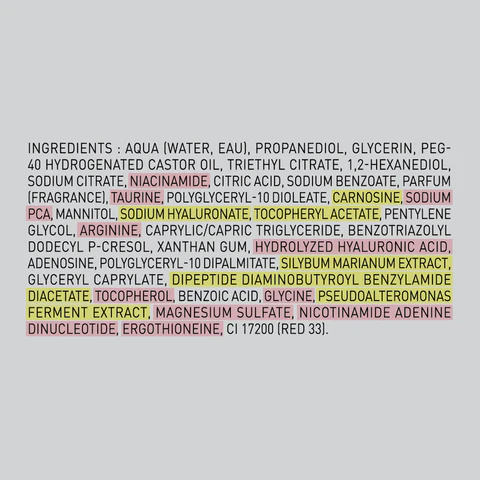
This transparency wouldn’t exist without a precise legal framework: the EU Cosmetics Regulation (EC No. 1223/2009) has long required every cosmetic to display its INCI list (International Nomenclature of Cosmetic Ingredients) on the packaging. That public, standardised list is exactly what apps like Yuka use to build their scores. Transparency didn’t start with the app, it was already a legal obligation; Yuka simply turned it into an everyday consumer touchpoint and an immediate purchase criterion, on the shelf and online alike.
What this means for a brand
On a product page, whether sold in a pharmacy, in-store, or on a marketplace like Amazon, the ingredient list is no longer legal small print nobody reads: cosmetic ingredient transparency has become a selling point in its own right, scrutinised as closely as the price or the reviews. Three habits are becoming essential:
- Anticipating how Yuka will read your own range, product by product, rather than discovering it through customer feedback.
- Documenting formulation choices directly in the product page (why this active ingredient, at what dose, for what benefit), to take back control of a narrative the app reduces to a single number.
- Resisting reactive reformulation: removing an ingredient purely because it lowers a score, without a full scientific reassessment, can degrade the product’s actual efficacy.
My take
Having spent several years building product pages for a Korean cosmetics brand where transparency about active ingredients is already deeply ingrained (see our article on the rise of K-Beauty), I see the Yuka effect as an accelerator rather than a threat: it pushes the whole sector toward a standard the best brands were already meeting. The real vigilance should be on how consumers use it: a score out of 100 is a useful reference point, it doesn’t replace a dermatologist’s opinion or a nuanced reading of a formula as a whole.
Agathe Blaise
Sources: The rise of the Gen-Z-loved Yuka app – Glossy, As Yuka Gains Millions Of Users, Beauty Industry Insiders Question The Veracity Of Its Product Ratings – Beauty Independent, Cosmetic Chemists Break Down the Yuka App Trend – Hypebae.